

 22
22 Throughout the history of Islam, the ulema have occupied a central and irreplaceable position as inheritors of the Prophetic mission. Their responsibility has never been confined to ritual guidance alone; rather, they have served as moral sentinels, social reformers, and voices of conscience within their communities. Because of this role, sincere scholars have repeatedly come into conflict with forces driven by hypocrisy (nifaq), personal interests, and moral corruption. The targeting of ulema, therefore, is not an accidental by-product of disagreement but a deliberate and recurring strategy employed whenever truth threatens entrenched falsehood. The Quran presents munafiqeen as an internal danger whose harm is more severe than that of open enemies. Allah describes them as those who claim faith outwardly while concealing disbelief within their hearts (Quran 2:8–10). Their defining trait is deception misusing religious language, public concern, and moral posturing to advance hidden agendas. This deceptive nature explains why their primary battlefield is not open debate but rumour, suspicion, and manipulation of perception. One of the most consistent weapons of munafiqeen against ulema is character assassination. When they are unable to challenge scholars on intellectual, ethical, or spiritual grounds, they attack personal credibility instead. Labels such as “agent,” “extremist,” “immoral,” or “corrupt” are strategically deployed to damage trust. These accusations are rarely supported by evidence; their power lies in repetition, emotional appeal, and the speed with which they circulate among uncritical audiences. This destructive pattern was first employed against the Prophet Muhammad ﷺ himself. The Qur’an records how he was accused of madness, sorcery, and fabrication (Quran 15:6; 38:4). These accusations were not responses to any moral failing but reactions to the transformative power of divine truth. The opponents of the Prophet ﷺ understood that if his character could be questioned, his message could be weakened in the public mind.
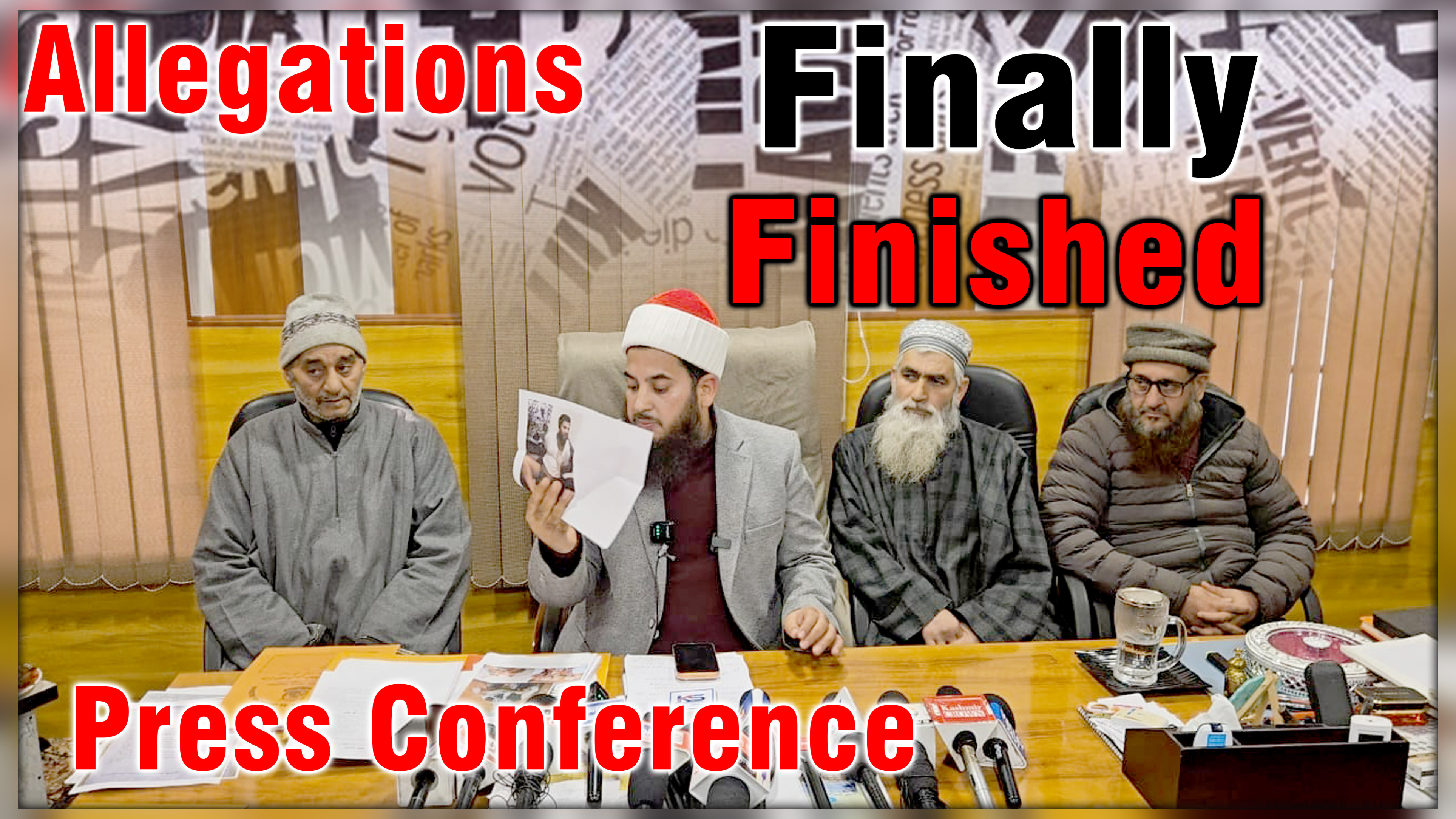
The same strategy reappears throughout Islamic intellectual history. Imam Abu Hanifa was imprisoned for refusing to legitimize unjust authority, Imam Ahmad ibn Hanbal endured flogging during the Mihna, Imam Malik was publicly humiliated, and Imam al-Ghazali faced accusations of deviation. In each case, scholars were targeted not because of error, but because their integrity threatened systems of power and complacency. Time ultimately exposed the falsehood of their accusers and elevated the scholars as enduring authorities. In the contemporary context, Allama Dr. Shaykh Hami stands as a living embodiment of this historical continuity. His lifelong struggle against drug abuse, moral degradation, social injustice, sectarianism, and spiritual emptiness has given him immense influence among the masses. Such influence, however, inevitably provokes hostility from those whose interests depend on social disorder, moral confusion, or ideological manipulation. Over the years, Shaykh Hami has been systematically targeted with a range of defamatory labels. He has been portrayed as a “foreign agent,” a “political cleric,” a “Prostitute” and a figure driven by hidden motives. At times, baseless allegations have even been directed at his personal honour. These attacks were not isolated incidents but part of a sustained effort to erode his moral authority and create doubt among followers and observers alike. The hostility against him reached its most dangerous form in the attempted murder against him. This violent act marked a chilling escalation from verbal and digital defamation to physical elimination. Such an attack was not merely aimed at silencing one individual; it was an assault on the broader message of peace, unity, reform, and spiritual revival that he represents. History shows that when slander fails, violence becomes the final refuge of hypocrisy.
Remarkably, Shaykh Hami’s response to this life-threatening ordeal reflected prophetic wisdom rather than personal anger. He refrained from inciting retaliation and instead reinforced his message of patience, restraint, and social responsibility. This response resonates with the Qur’anic injunction: “Repel evil with that which is better” (Quran 41:34), demonstrating that moral strength lies in principled endurance rather than reactive hostility.
In parallel with physical threats, a coordinated social media campaign has persistently targeted him. Through anonymous accounts, selective video edits, fabricated narratives, and misleading commentary, these campaigns aim to distort his words and intentions. The digital environment allows misinformation to spread rapidly, often reaching thousands before truth has a chance to respond. A particularly alarming development has been the circulation of fake AI-cloned audio recordings falsely attributed to Shaykh Hami. These fabricated voices represent a new and dangerous dimension of modern fitnah, where advanced technology is weaponized to manufacture speech and manipulate public perception. Such acts blur the boundary between truth and falsehood, making verification increasingly difficult for ordinary listeners.
Islam unequivocally condemns such deception. The Prophet Muhammad ﷺ warned, “Whoever deliberately attributes to me what I did not say, let him take his seat in Hellfire” (Sahih al-Bukhari). By analogy, falsely attributing statements to scholars is a grave moral crime, as it corrupts knowledge and misleads society. These relentless attacks have inevitably affected Shaykh Hami’s personal life. Continuous surveillance, public suspicion, and malicious gossip have imposed emotional strain on his family and disrupted personal peace. Yet, despite these pressures, he has consistently chosen silence over sensationalism and dignity over public confrontation, reflecting deep spiritual discipline. The organizational impact has also been significant and deeply distressing. Karwani Islami International, the movement founded and led by him, has not only faced external defamation but also internal betrayal by the very same individuals who later emerged as his loudest accusers.
Investigations and documented experiences reveal that certain elements fraudulently looted organizational resources under the pretext of relief and welfare funds. When accountability was enforced and misuse was exposed, these individuals turned hostile, transforming financial misconduct into ideological vendetta. Their subsequent campaigns of slander were thus motivated not by concern for religion, but by fear of exposure and loss of illegitimate gains. In addition to such internal sabotage, he has historically been targeted by powerful external lobbies most notably drug mafias and networks of moral corruption. His tireless struggle for a complete drug ban in Kashmir, and his vocal advocacy against narcotics at regional and national levels, directly threatened criminal economies built on addiction and youth exploitation. These mafias, accustomed to silence and complicity, found in him an uncompromising moral adversary, and thus actively participated in campaigns to intimidate, defame, and neutralize his influence. The Quran explicitly warns against the behavior exhibited by such attackers: “O you who believe, avoid much suspicion… and do not spy nor backbite one another” (Quran 49:12). Munafiqeen violate these commands while outwardly presenting themselves as guardians of religion, thereby deepening societal hypocrisy.
He frequently reminds his followers that scholars are not measured by immunity from trials, but by steadfastness (istiqamah) upon truth. Trials, he emphasizes, are often divine tests that distinguish sincerity from convenience. This understanding places hardship within a spiritual framework rather than a narrative of victimhood. The Prophet ﷺ foretold an era strikingly similar to the present when he said: “There will come years of deception in which the liar will be believed and the truthful will be rejected” (Sunan Ibn Majah). This hadith captures the moral inversion created by misinformation, propaganda, and digital manipulation. In such times, the responsibility of the common believer becomes crucial. Verification before sharing, restraint before commenting, and fear of Allah before speaking are ethical obligations. The Prophet ﷺ warned, “It is enough of a lie for a person to narrate everything he hears” (Sahih Muslim), a statement particularly relevant in the age of viral misinformation. The targeting of Shaykh Hami reflects a broader struggle between moral clarity and organized hypocrisy. When scholars expose injustice, challenge moral decay, and awaken spiritual consciousness, they disrupt false comfort. Munafiqeen respond not with reform but with slander, technological manipulation, and, at times, violence. In conclusion, accusations, labels, and conspiracies are transient phenomena, while sincerity leaves an enduring legacy. The experience of Allama Dr. Shaykh Hami stands as a contemporary testament to a timeless truth: munafiqeen may dominate narratives temporarily, but history ultimately belongs to those who uphold truth with patience, integrity, and unwavering faith.
Research Scholar (Karwani Islami International)
Sheikh Sameer Manzoor
Copyright 2026 Karwani Islami. Designed By ShivaClicksoft
 English
 Deutsch
 简体中文
简体中文
 العربيّة


